Post-Fire Indoor Air Quality (IAQ) Testing
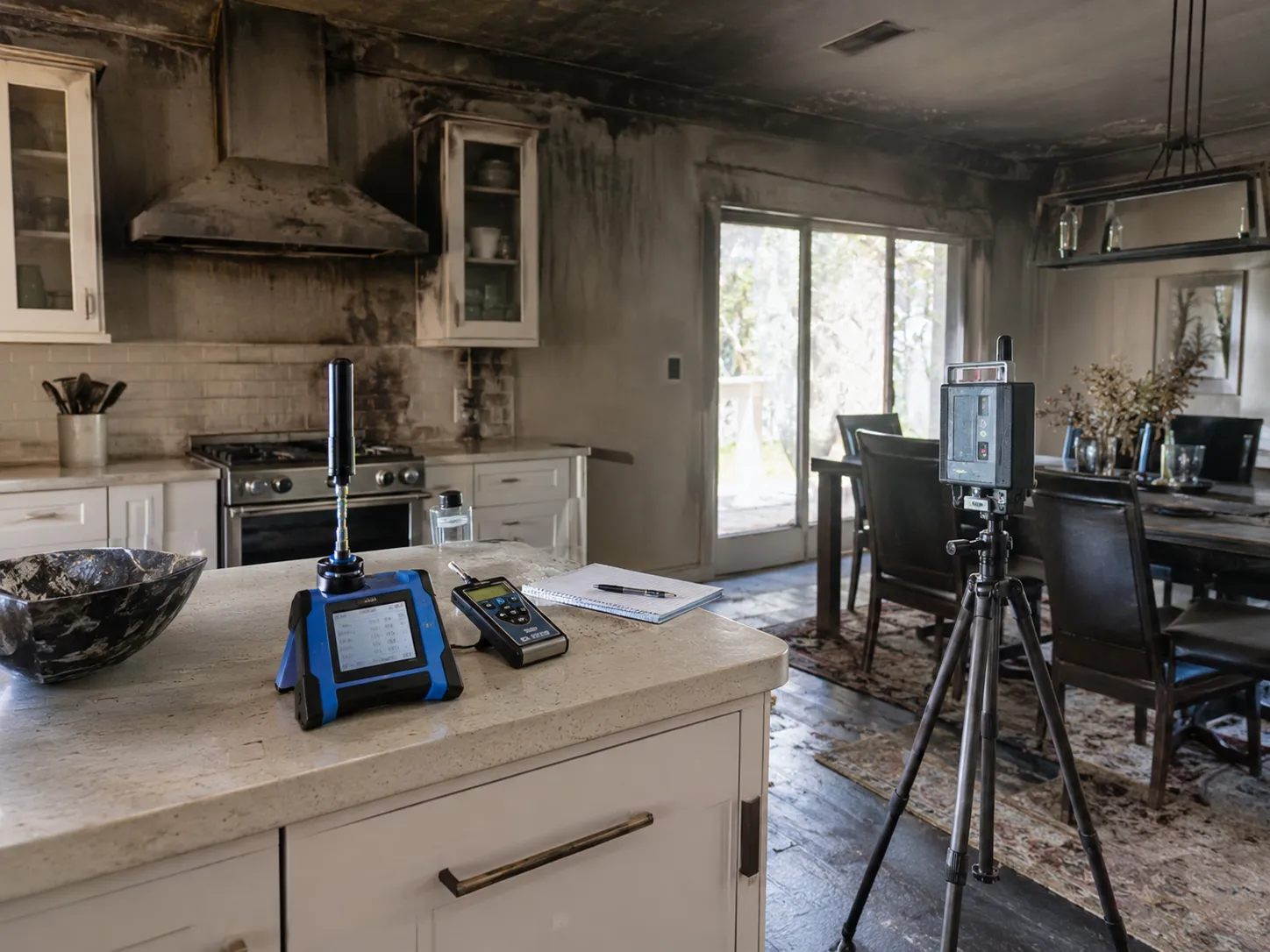
Post-fire indoor air-quality testing focuses on current indoor environmental conditions after a fire or smoke event. This type of assessment is different from examining surfaces for settled residue because it considers the broader indoor environment rather than relying only on material found on walls, floors, furnishings, or other surfaces.
Depending on the property and the concerns being evaluated, the assessment may include indoor environmental readings, odor observations, accessible HVAC conditions, surface sampling, and other appropriate testing. The goal is to document conditions in the areas covered by the assessment.
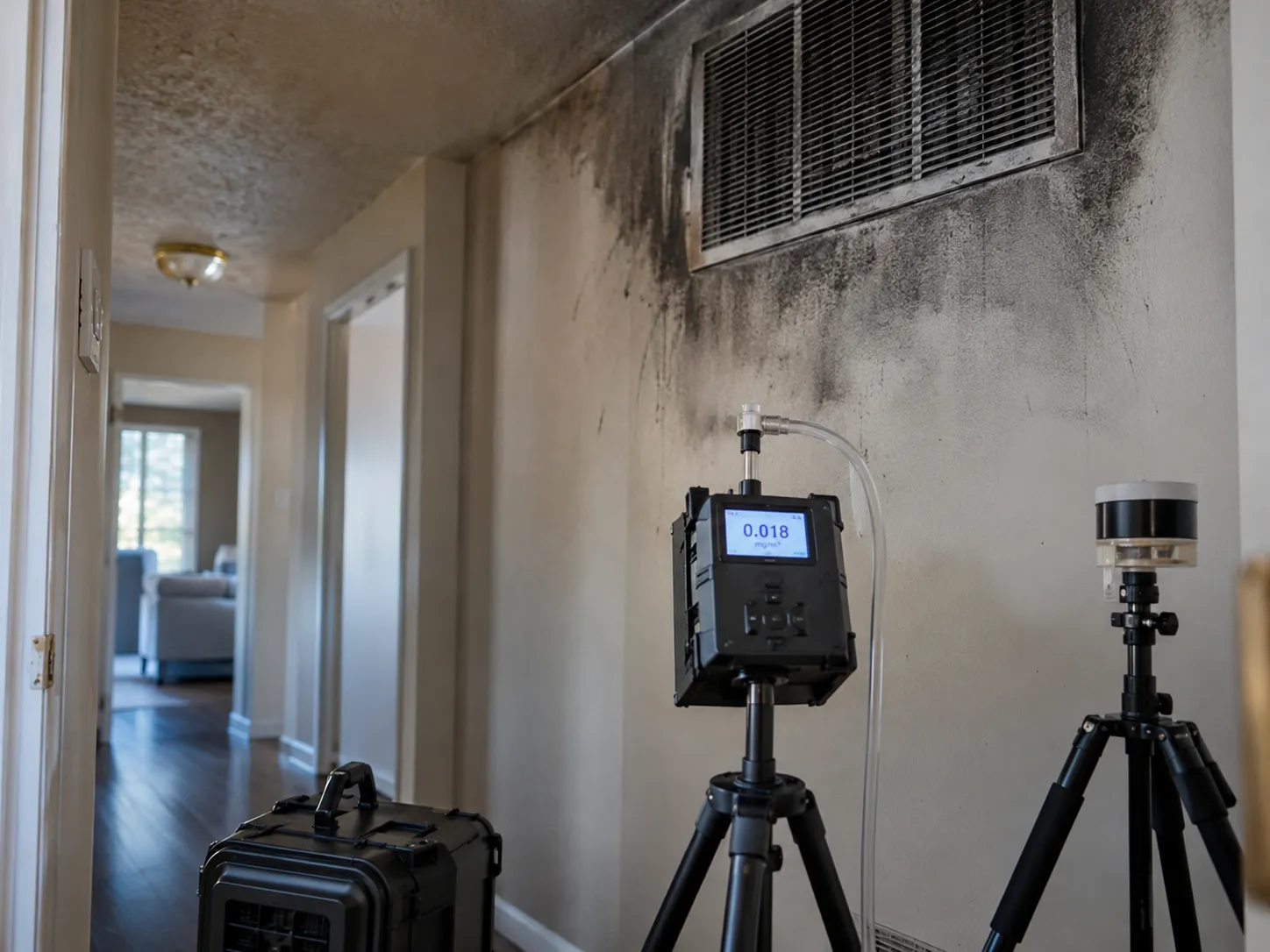
Surface Residue and Indoor Environmental Conditions
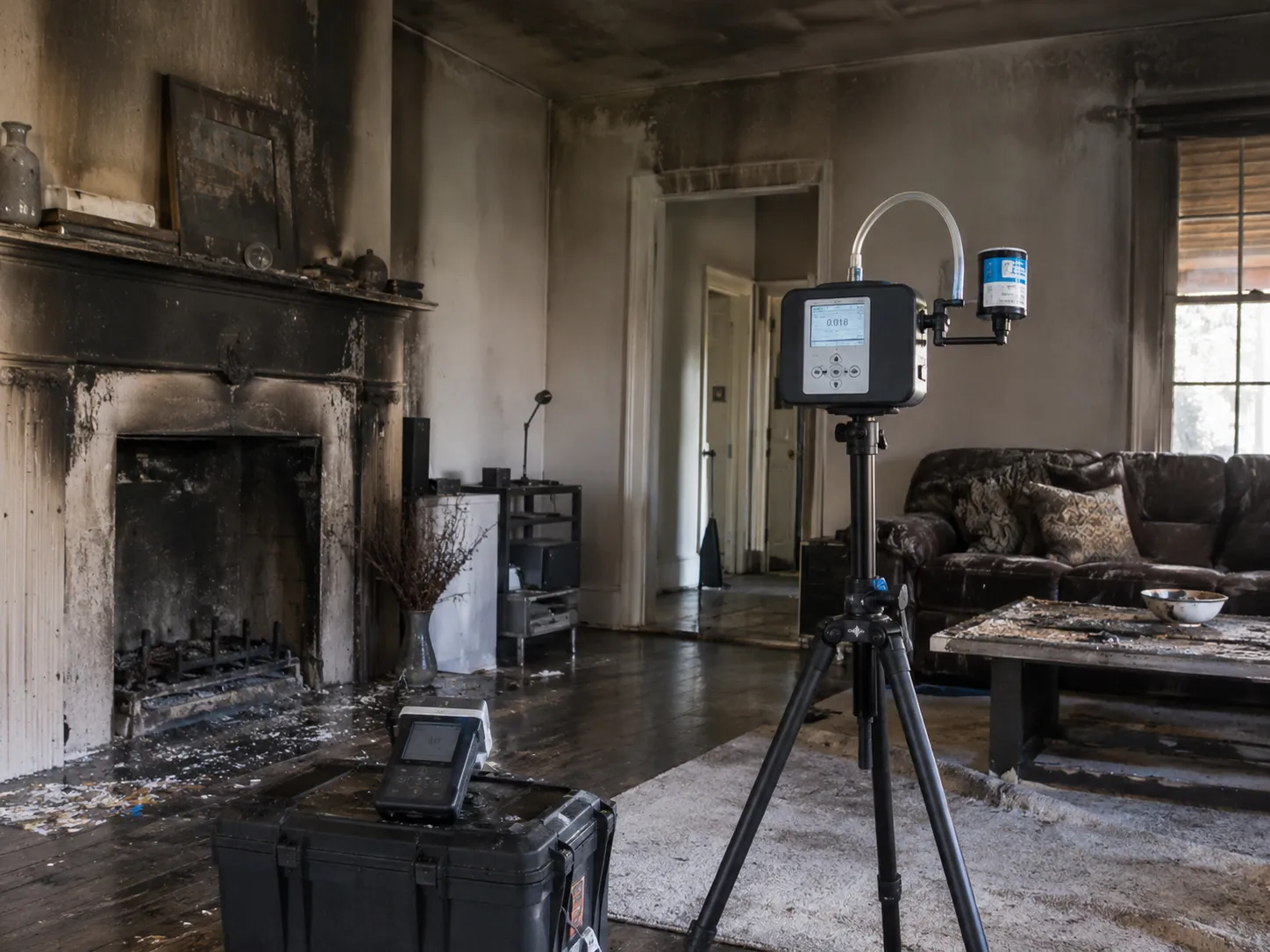
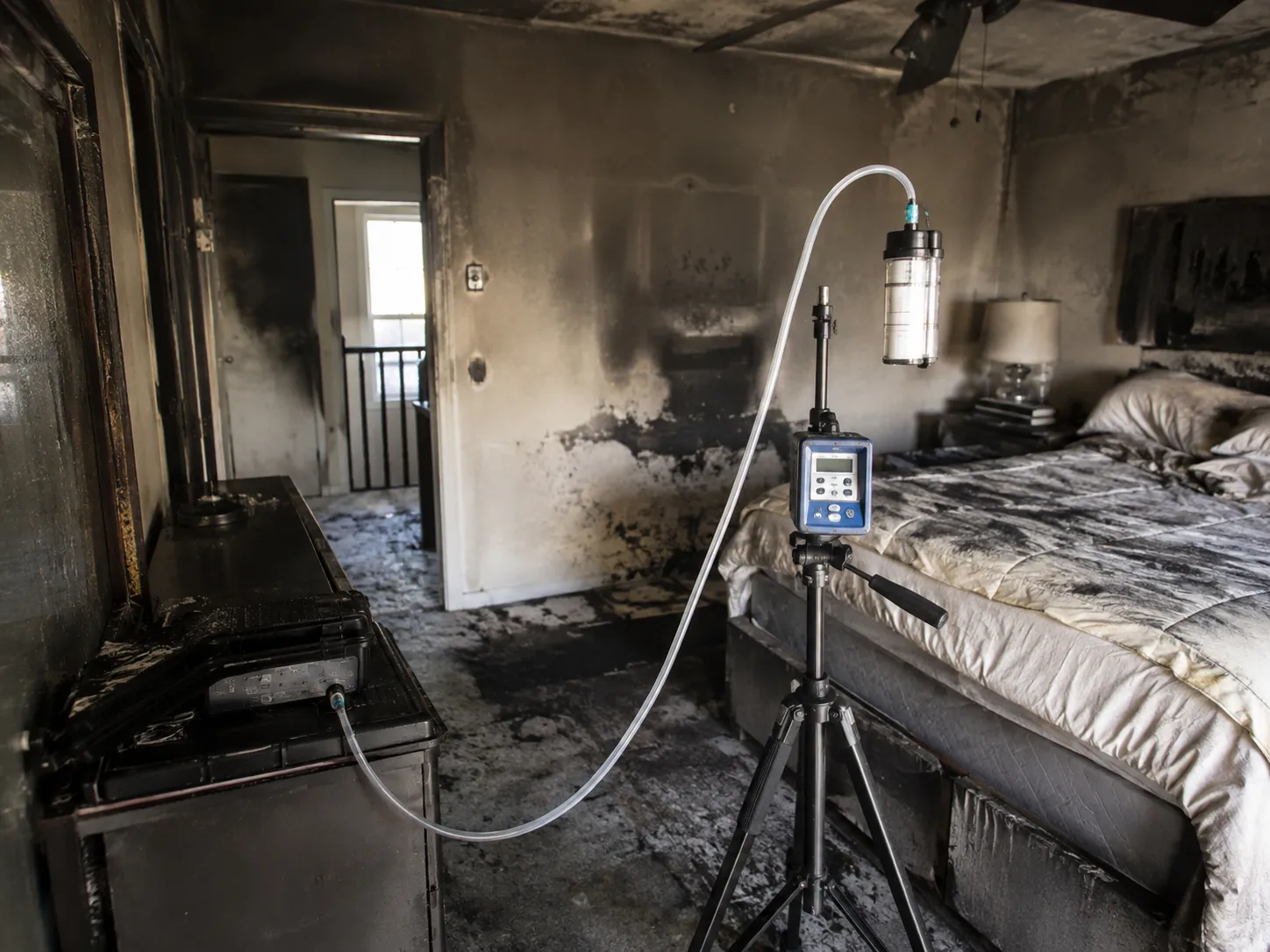
Settled residue testing examines material collected from specific accessible surfaces, while indoor air-quality evaluation considers environmental conditions within selected areas of the building. These approaches provide different types of information and may be used together when the property conditions or assessment objectives support additional evaluation.
Odor observations, accessible ventilation conditions, environmental readings, and targeted surface samples can help provide a more complete picture of the areas being assessed. The testing approach should be selected according to the property history, observed conditions, accessibility, and specific concerns following the fire event.
- Indoor Environmental Readings
- Odor Observations
- Accessible HVAC Conditions
- Surface Sampling
- Property-Specific Testing
- Documented Assessment Conditions
Understanding the Scope and Limitations of Testing
Post-fire indoor air-quality testing should be interpreted within the scope of the specific property, locations evaluated, and testing methods used. One environmental reading or air sample cannot establish the condition of every room, concealed area, surface, or building component throughout the property.
Likewise, a single air sample should not be used to claim that an entire building is safe or completely free of fire-related contamination. Findings should be considered together with inspection observations, odor conditions, accessible HVAC information, surface sampling when appropriate, and other relevant property-specific information.
Common Questions About Post-Fire Indoor Air-Quality Testing
Surface testing examines material collected from a specific accessible location, while post-fire indoor air-quality testing evaluates selected indoor environmental conditions. Depending on the property, both approaches may be useful because they provide different information about the areas being assessed.
The assessment may include indoor environmental readings, odor observations, accessible HVAC conditions, surface sampling, and other testing appropriate to the particular property. The exact scope depends on the fire event, observed conditions, accessibility, and the concerns being evaluated.
No. A single air sample cannot represent every room, surface, concealed space, or building component. Findings should be interpreted within the specific locations and testing scope rather than treated as proof that the entire property is safe or free of all fire-related contamination.
Select Service:
Send us a Message
Need Help Choosing a Service?
Not sure which service is right for you? Our team can help you understand your options and recommend the appropriate next step.